NVIDIA H200 Price in 2026: Buy, Rent, and Server Costs
NVIDIA H200 price explained: $31K+ per NVL card, about $293K for an 8-GPU server, and $3.50 to $10.85 per hour to rent. Learn how to budget.
9 min readRead story
81 articles
Compare 5 providers of a dedicated server with GPU, with NVIDIA options, real monthly and hourly prices, and a simple way to pick the right card.
The L40S GPU explained: 48 GB GDDR6, Ada Lovelace specs, release date, buy and rent prices, and how to tell if it fits your inference workload.
AI agent versus agentic AI explained: the core difference, four tests to tell them apart, real examples, and what each needs from inference.
Learn what a GPU is, how it differs from a CPU, where gaming and AI use it, and when renting by the hour beats buying, with real hourly rates.

Agentic AI is AI that plans, uses tools, and acts toward a goal on its own. Learn the definition, how it works, examples, and how to build one.
Learn how to read AMD GPU names like RX 9070 XT, identify the card in your PC, and compare Radeon 9000, 7000, and 6000 series specs and uses.
Learn what an LLM is, what the acronym stands for, how tokens and transformers produce text, and how to call one through an API.
Deployment means moving forces or code into active use. See the military and software definitions, how each works, and the closest synonyms.
What an MCP server is, how it works with AI apps, and how it differs from a regular API, with examples, a setup walkthrough, and security tips.
The NVIDIA H100 explained: what it is, specs for SXM, PCIe and NVL, how to size one for your model, and what it costs to buy or rent in 2026.
The RTX PRO 6000 price is about $16,000 new, up from $8,565 at launch. See street prices, Max-Q notes, and hourly rental rates before you buy.
Build a custom MCP server in Python: set up, add tools, test with Inspector, connect Claude, and host it remotely. Working code included.
Find the best GPU for LLM work: seven NVIDIA picks ranked by VRAM, budget and use case, with model-size math to match a card to your model.
A100 vs H100 compared: the H100 is 2-3x faster for training and 1.5-2x for inference, but the A100 can win on cost per job. Specs, VRAM, and a checklist.

Learn what AI agents are and how they work: the observe-plan-act loop, five agent types, real examples, and a working code sketch for your first agent.
H100 vs H200 compared: specs, memory, performance, power draw and price, plus a simple way to decide which GPU to buy or rent.
H200 GPU specs explained: 141GB HBM3e, 4.8 TB/s bandwidth, SXM5 vs NVL power draw, model fit examples, and what it costs to buy or rent.
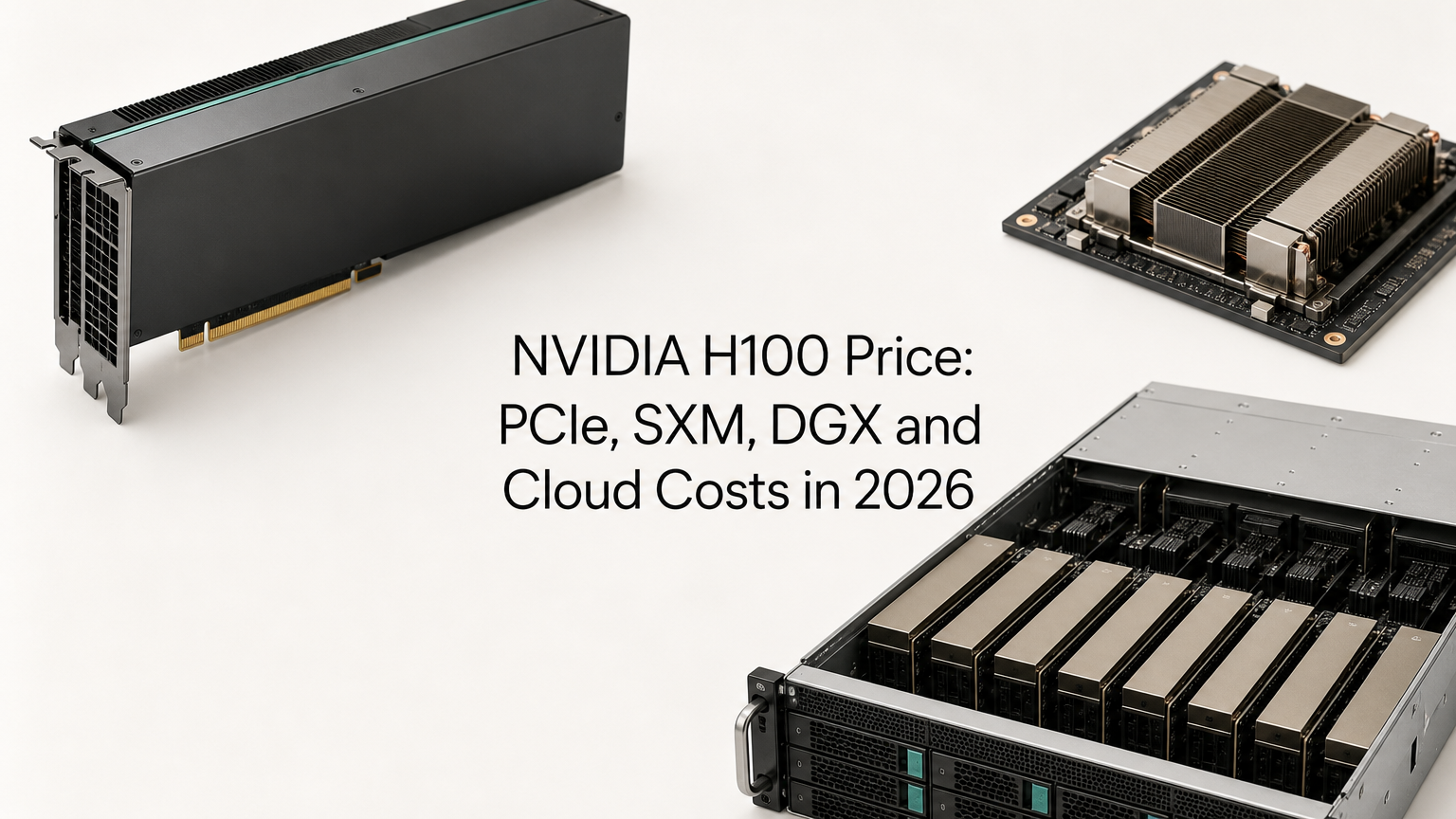
NVIDIA H100 price explained: PCIe at $25K-$30K, SXM at $35K-$40K, DGX and cloud rates, plus a buy-versus-rent break-even you can reuse.
Learn what DeepSeek is, how to use its free chatbot and API, which models exist, and what to know about privacy before you send it your data.
Learn what NVIDIA GPU cloud means, from the NGC catalog to renting GPUs by the hour. See how access works, what it costs, and which GPU to pick.
Learn what time to first token means, how to measure TTFT with streaming code, and how it differs from TPOT, ITL, tokens per second and latency.
Learn what the GLM 5.3 API is, what it costs per million tokens, which providers host it, and how to get a key and send your first request.
Agentic AI versus generative AI explained: how each works, real examples, a decision test, and what one agent run costs in tokens.
Looking for a Together AI alternative for serverless inference? Compare five options on pricing, model coverage, and fit, with a worked cost example.
H100 rental prices run about $2 to $3.55 per GPU-hour. See rates by provider, what drives them, and the break-even math for renting versus buying.
Looking for a GPU for rent by the hour? Compare four providers on hardware, billing and listed prices, with a worked cost example.
gpt-oss 120b vs GPT-4o: about 60x cheaper per token, stronger at reasoning, but text-only. See benchmarks, speed, and how to test both on your prompts.
DeepSeek-V4-Flash Vision compared with Opus 4.8 on OCR, charts, and multi-image tasks, plus what it costs and how to call it with the OpenAI SDK.
See the best AI models for coding 2026, ranked by benchmark scores, price per token, and the tasks each one handles best.
Data residency under GDPR: EU data can leave the EU, but only on a lawful basis. See how it differs from sovereignty and what to ask your provider.
Looking for a free OpenAI API alternative? Compare 7 free tiers and local options with real limits, base URLs, and what each costs once free ends.
Compare six AI video generation API options on quality, pricing, free access and integration, plus what happened to the Sora and Veo APIs.

The best LLM for your workload is the model and provider configuration that meets your application’s quality, latency, reliability, and budget requirements. Define acceptable results, compare candidates on representative tasks, and test realistic
Set up the GLM 5.2 API in four steps: pick a provider, get a key, send a first request, cut costs. Includes price ranges and honest free options.
Kimi API pricing for K3.1 Pro and K2.6: $2.00 input and $10.00 output per million tokens, cache-hit rates, and a worked 30-day cost example you can reuse.
Learn how to get a Seedance 2 API key, compare providers, estimate per-clip costs, and send your first text-to-video request with working code.
gpt-oss-120b vs GPT-5 compared on price, benchmarks, context, and speed. For 100M input and 20M output tokens a month, you pay about $7 versus $325.
GLM 5.2 benchmarks put it 4 points behind Opus 4.8 on Terminal-Bench 2.1 and 20.8 behind on NL2Repo. See where it wins, what it costs, and how to test it.
Six code LLMs compared on exact API pricing, context windows, and output limits, plus the workflow that keeps AI-written code small and tested.
Kimi API setup in about five minutes: create a key, set the base URL, pick K3 or K2.6, and see real costs from $0.95 per million input tokens.
Pick an AI agents platform by who builds the agent: 8 options from no-code canvases to model APIs, with pricing, free plans, and honest tradeoffs.
GLM coding explained: Z.ai's models, Coding Plan tiers at $18, $72, and $160 a month, tools that work with it, and when pay-per-token is the better deal.
Find the right DeepSeek alternative for chat, open-source, API or coding. 8 picks with free tiers, per-token prices, and a 60M-token cost example.
Zero data retention means your prompts and outputs are never stored. See what ZDR covers, how OpenAI, Anthropic and OpenRouter handle it, and a checklist.
Learn how to use the Seedream 4.5 API: compare hosts and per-image prices, get an API key, send a first request, and handle async results safely.
Learn what AI agent infrastructure is, how runtime, orchestration, storage, tools, and observability fit together, and which failures to prevent first.
See the best open source coding models for 2026, from GLM 5.3 Flash to Gemma 4 31B, with who each suits, license notes, and how to test them.
GDPR-compliant AI is a setup, not a product. See seven vendor checks and five ways to run AI on personal data, from EU-hosted APIs to self-hosting.
DeepSeek V4 Flash requirements by quant tier: 92 to 169 GB of memory, what VRAM, RAM and disk each do, and the llama.cpp steps to run it locally.
Download DeepSeek-V4-Flash NVFP4 from Hugging Face, plan for its 145 GB memory footprint, and serve it with vLLM or SGLang on Blackwell GPUs.
Compare Geodd and 7 alternatives for AI image generation: how each bills, which have free tiers, and who should skip each, so you ship faster.
DeepSeek R1 vs V4 compared on benchmarks, pricing, and context window. See when V4 Pro or Flash beats R1 and how to test cost per task on your logs.
Learn how multimodal AI models combine text, images, audio, and video, see real examples and limits, and get a test plan to pick the right one.
AI benchmarks that still matter in 2026: SWE-bench, GPQA, ARC-AGI-2 and more, plus how to spot noisy scores and test a shortlist on your own tasks.
OpenAI structured output guarantees valid JSON that matches your schema. Set it up in the Responses API or Chat Completions, and handle refusals.
The best LLM for coding depends on the job. See 9 models by use case and price, then pair a cheap default with a premium fallback, tested on 3 tickets.
DeepSeek V4 Flash size depends on total parameters, quantization, and context. Use our memory formula for FP8 vs 4-bit, and see when an API is cheaper.
Cloud GPU pricing across 7 providers: A100, H100 and B200 hourly rates, who bills per minute or second, and the egress and storage fees that add up.
12 LLM benchmarks and leaderboards, from SWE-bench to LiveBench, compared on what they measure and where they mislead. Pick the mix for your workload.
12 LLM benchmarks and leaderboards, from SWE-bench to LiveBench, compared on what they measure and where they mislead. Pick the mix for your workload
The 8 best AI models for coding, ranked by SWE-bench score, price, and context window, plus a cheap-first routing plan that cuts your cost per fix.
Set up the DeepSeek API with Python and JavaScript. See which model ID hits V4.1 Flash, what each costs per million tokens, and what changed.
Learn what an OpenAI compatible API is, how to switch providers with just base url and key changes, and a checklist for migrating with Geodd.
Compare every way to try DeepSeek V4 free: chat app, API credits, router endpoints, self-hosting, and when to upgrade to Geodd for production.
DeepSeek V4 Flash benchmarks vs GPT-OSS-120B and GLM-5.2, how much of its 256K context you can use, and what it costs serverless vs dedicated.
DeepSeek V4 benchmark scores compared with Claude Opus on coding, reasoning, and cost per million tokens, plus red flags that make a score unreliable.
DeepSeek API walkthrough: get a key in about five minutes, pick the chat, coder, or reasoner model, and send a first request with the OpenAI SDK.
Get a DeepSeek API key in about five minutes: signup, key security, your first curl call, trial limits and pricing, plus a backup for rate limits.
DeepSeek API pricing for V4 Flash and Pro per million tokens, peak vs off-peak rates, a worked monthly cost example, and how retries inflate your bill.
MiniMax M3 vs DeepSeek V4 Pro compared on context length, price per million tokens, and our own multi-step coding tests, so you pick the right model.
Seven OpenAI API alternatives compared on cost per million tokens, latency under agentic load, GDPR fit, and how much code you change to switch.

Geodd now supports ByteDance’s Seed, Seedream, and Seedance model families for language and agent workloads, image generation, and AI video generation. The models are available through Geodd’s production inference platform.

Geodd is a GDPR-ready AI inference provider focused on data minimization and secure processing. It does not store standard API prompts, outputs, request/response bodies, or customer datasets, and API data is not used for training or human review.
Geodd is partnering with Opper AI to make Geodd’s inference infrastructure available through the Opper AI gateway.

Geodd EU serverless inference is now live, starting with GPU infrastructure hosted in Norway. EU customers can now run supported models through Geodd with inference traffic served within the EU region, helping teams meet data residency, regional
Gemma 4 31B IT is available on Geodd for teams evaluating 31B-class open-weight inference. It is a fit when the workload needs stronger reasoning, coding support, long-context handling, multimodal capability, or instruction-following quality that
DeepSeek-V4-Flash is now available on Geodd, based on Geodd-provided product information. It is relevant for teams evaluating DeepSeek-V4-Flash for production inference where workload fit, latency, throughput, cost behavior, context length, and
Inference infrastructure with direct engineering support means the provider does more than supply GPUs, model endpoints, or a support queue. Engineers are involved in deployment, monitoring, scaling, incident response, workload tuning, and

A dedicated GPU gives your team reserved GPU compute. Dedicated AI inference gives your team a dedicated or isolated inference environment that may include serving runtime, monitoring, scaling, optimization, and support, depending on provider scope.

The total cost of self-hosted inference is not only the hourly GPU price. It includes GPU capacity, supporting compute, storage, networking, orchestration, observability, engineering time, runtime tuning, scaling, incident response, and the cost of
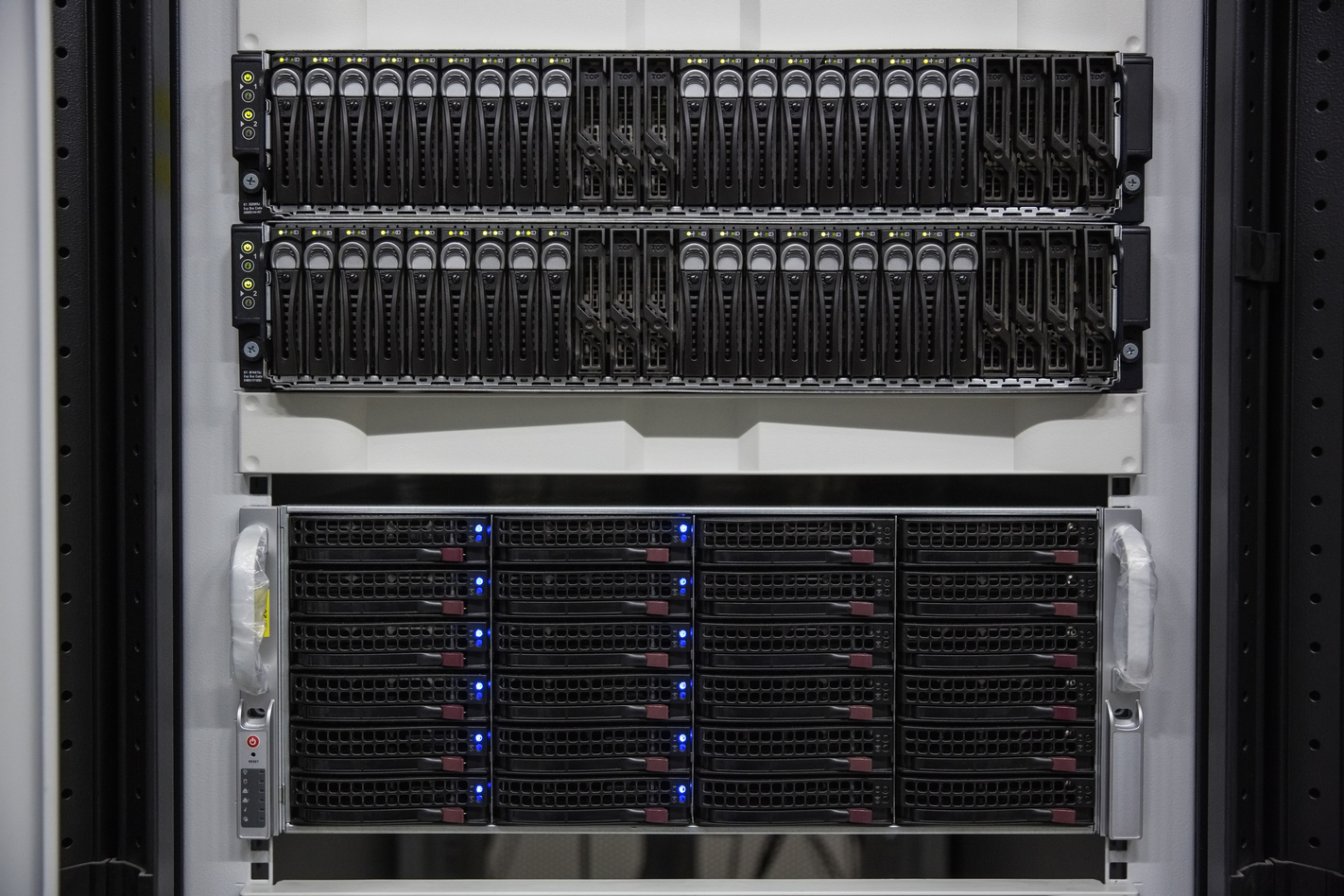
Serverless inference is usually the better fit for variable, early-stage, or unpredictable workloads where teams want managed API access without provisioning inference infrastructure. Dedicated inference is usually the better fit when workloads are